Interior Design 1 Part 5 Exercise 1.4: Site Analysis: Physical & Historical Context

Sun Path at Oxton recreation ground

Average Weather Patterns for Oxton, Nottinghamshire

Approach, access and egress, current and past use, transport links and relationship to Village Hall

How the research has informed my ideas

Spending time on the recreation ground and researching the areas history has definitely assisted me in deciding on the best location for the pavilion. It has also given me a number of ideas as to what form and materials the pavilion should be created from and made me think about the pavilion from a civil stand point. Oxton is a traditional, conservative village, to create anything too contemporary in design or materials I think would contrast too highly with the village vernacular and be disapproved of by the villagers and Parish Council, which hold some authority in the village. Currently my thinking would be to create a design which relates to one of the historical sites in the area and using wood as a main material in the form of wooden posts. This would marry with the posts of the play area and reference wood as an ancient building material as well as honour the fact that Oxton was once part of Sherwood Forest.

Research reflection

Undertaking the research has given me a greater knowledge of the history of the village. To a greater extent it has made me think about the purpose of the pavilion, what part would it play in the village, who could and would use it and what would it add to the village to make it something worth while. Added to this it has helped me eliminate ideas in relation to design and building materials, as mentioned above. Initially I had ideas of something quite cutting edge, using contemporary materials. However, the time spent researching and thinking about the pavilion fitting into the village I realised these design ideas would be unlikely to work or be popular.

All of the approaches suggested in the course work and which I took I would use again, each has brought something to my current thinking and decisions. I feel it is best to explore all these angles, some have more relevance than others but each should be explored for practical reasons and to help the creative juices flow!

Bibliography

My Oxton. (2019). My Oxton. [online] At: https://myoxton.org/ (Accessed on 13.06.19)

Timeanddate.com. (2019). Sun & moon times today, Oxton, England, United Kingdom. [online] At: https://www.timeanddate.com/astronomy/@2640716 (Accessed on 19.07.19)

Images

NottsBus 747 Route Map. (2019). [image] At: https://bustimes.org/services/747-lowdham-calverton-oxton (Accessed on 16.07.19)

Old Forge Oxton, Pump [photograph] At: https://britishlistedbuildings.co.uk/101387166-petrol-pump-to-east-of-the-forge-oxton#.XTHCAPZFzcU (Accessed on 19.07.19)

Oxton Village School. [photograph] At: https://myoxton.org/about-oxton/places-of-interest/ (Accessed on 19.07.19)

Murray-Rust, A. (n.d.).[Photograph] The Manor House (C) Alan Murray-Rust. Geograph.org.uk. At: https://www.geograph.org.uk/photo/1629233 (Accessed on 29.03.19)

(New build) (2018) [photograph] At: https://media.rightmove.co.uk/dir/crop/10:9-16:9/38k/37766/76540496/37766_NOT140113_IMG_01_0000_max_476x317.jpg. (Accessed on 29.03.19)

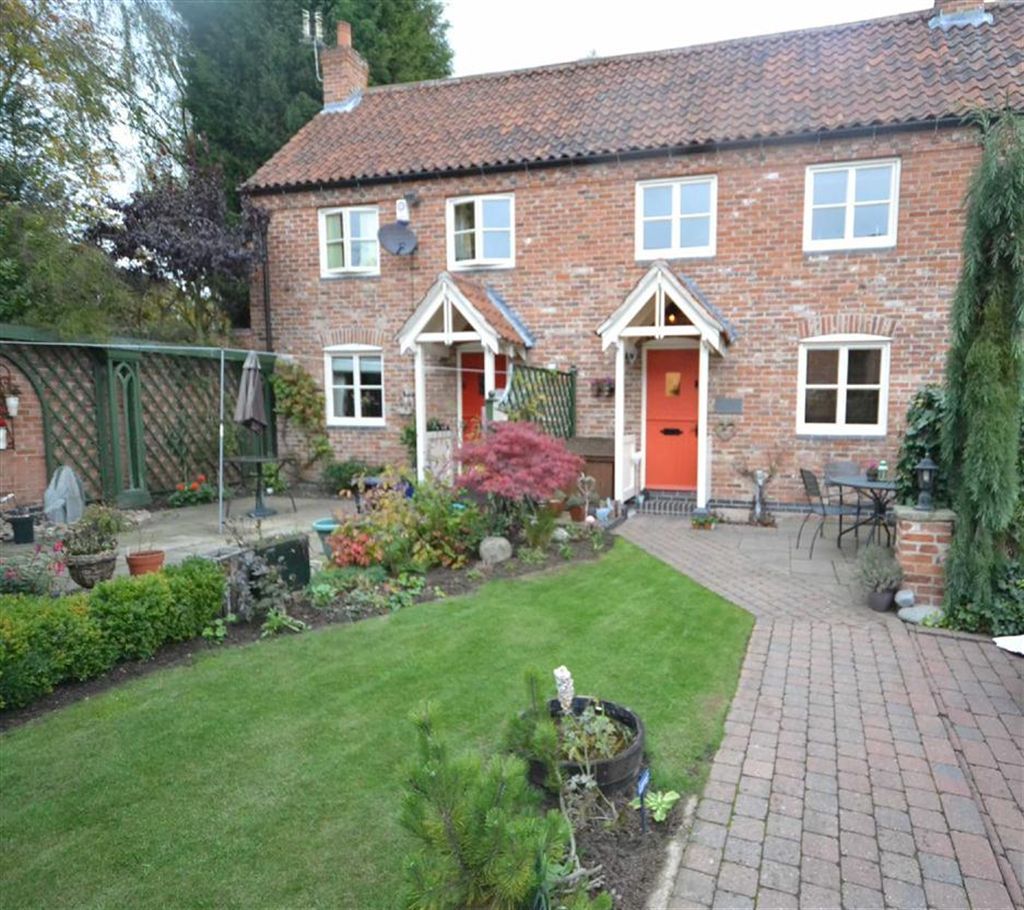
(Terrace) (2018) [photograph] At: http://media.rightmove.co.uk/13k/12215/37701983/12215_100027A_27_IMG_01_0001.JPG. (Accessed on 29.03.19)

(Barn conversion) [photograph] At: https://i.pinimg.com/originals/35/4a/2e/354a2ea9f0bca241fa0a7dc415a1beb8.jpg. (n.d.). (Accessed on 25.03.19)

(Elmcroft) (2019) [photograph] At: https://www.rightmove.co.uk/house-prices/detailMatching.html?prop=44747656&sale=59725611&country=england. (Accessed on 25.03.19)

Interior Design 1 Part 4 Assignment: Visualisation

Assignment 4 Feedback reflection

I was so pleased that my tutor commented on my improved drawing skills as this was an area I myself felt I had improved in, particularly the bedroom sketches I had undertaken.

My tutor had previously asked me to reference others work more often, which he noted I had done – but which I must keep up.

The comments about my cube studies were better than I expected, I initially struggled with this exercise but I persevered and spend a lot of time to aim for better results. Again, my tutor gave particularly positive feedback about my collages, in particular the digital collage, this was very reassuring and encouraging.

Although I had very positive feedback about my bedroom perspective my tutor was a little more negative about the ellipses on my lampshade – which when reviewing I can see why – some more practice required in this area!

I sensed a little disappointment with my actual assignment piece, which I think is fair as I struggled to get a strong sense of what I was aiming to achieve. He suggested I experiment a little more with media, explore and find what works best, also to annotate the preparatory work which I displayed as part of the assessment, also to think about the structure in the real world. All feedback which I think is fair and I will aim to improve on/include in future work.

Assignment 4

Assignment 4 Reflection

This has been an enjoyable and enriching part of the course as I can see progression in my work, particularly my drawing abilities.

Having not drawn for years my initial attempts felt childlike and with little skill. Although I have a long way to go the practice I have been doing, along with research into techniques I believe has benefited me and I can see improvements. 

During these exercises however there were times when I got frustrated with my attempts, particularly during the texture exercises. In the midst of my frustrations I wondered why I need to sketch with any ability when we have computer packages which can do so much of the work for us? I read that Le Corbusier “used sketches to record things he felt a camera could not, such as concepts, underlying structure or feelings experienced in a space” (Spankie, 2009:51). Reading this at the at the time I was struggling helped to spur me on and appreciate that sketching is more than trying to create a picture.

When I did manage to create a texture or sketch which bore some resemblance to that I endeavoured to portray I felt very satisfied which further helped to motivate me with my drawing.

Learning one- and two-point perspective felt like a real skill to have and is hugely beneficial in achieving realistic drawings. It made me think that perhaps one day I can whip out a sketch book and undertake a quick and accurate sketch for a client, which can help to shape the beginnings of an interior and assist with clients perceptions – not something that is so easy to do so quickly with a computer – and a task which can easily and quickly demonstrate a level of skill to a client.

Using a variety of media has been valuable. It has provided me with an opportunity to understand different mediums and get to know which I work best with and can provide the look I aim to achieve.

I spent time looking at sketches of Le Corbusier, Frank Lloyd Wright, Norman Foster and Zaha Hadid which made me see real benefits of sketching as it allows the designer to provide their thought processes, through diagrams, sketches and text – and which can also be very beautiful.  Zaha Hadid’s are so full of movement with some sketches only showing squiggles and fluid lines – I expect to express the fluidity she intends for an interior. I have taken a lot of pleasure in discovering Frank Lloyd Wright’s sketches, many of which are themselves works of art, with their delicate colours interpreting a real beauty in the architecture and its surroundings, often depicting the atmosphere created by cascading water. I found that Frank Lloyd Wright’s work reminds me of the art work of Charles Rennie Mackintosh an artist and designer I have admired since I was young.

When looking at the works of interior designers I noted that designers Harding and Read have no high-tech computer aided designs on their website only images of their interiors along with pretty watercolours interpreting their designs. These watercolours are simple but affective, these along with the sketches of the other designers I looked into convinced me that sketching and rendering by hand is an invaluable and hugely satisfying skill to have.

Interior Design 1 Part 5 Exercise 1.2: Site Selection & Documentation

Location of Oxton, Nottinghamshire
Aerial view of crop marks indicating the outline of 2 Roman forts
Map of Old Ox Camp, Iron Age Site
Map of Oxton
Site of recreation ground including village hall and car park
Sketch of site with possible location of Pavilion

The site I have chosen for the Pavilion is in my own village Oxton, specifically the site of the village recreation ground. I have chosen this site due to it’s popularity with those who live in the village and visitors who come from surrounding areas. This is due to the open grass area which allows children to play and adults to play cricket. There is also a children’s play area and picnic benches. This site also brings people to it to enjoy the village fete and the yearly bonfire and fireworks show, which brings hundreds of people to the village. The car park of the village hall, which is located adjacent to the recreation ground, is often a meeting point for walkers, cyclists and conservation groups. The village hall itself holds numerous events from WI meetings to weddings to toy train enthusiasts conventions.

Images

Bing.com. (2019). map of oxton – Bing. [online] Available at: https://www.bing.com/search?q=map+of+oxton&form=EDGTCT&qs=PF&cvid=03eb352876fb4205ab7c9f49febadf87&refig=682d3688d8444ce3dea4054bfba99040&cc=GB&setlang=en-GB&PC=ACTS (Accessed on 2 July 2019)

My Oxton. (2013). Roman Fort near Beanford Lane ford. [online] Available at: https://myoxton.org/about-oxton/oxton-history/oxton-archaeology/roman-fort-near-beanford-lane-ford/ (Accessed 2nd July 2019)

Nottshistory.org.uk. (2007). Nottinghamshire history > Articles > Articles from the Transactions of the Thoroton Society > The Summer Excursion, 1908: Oldox or Hodox camp, Oxton. [online] Available at: http://www.nottshistory.org.uk/articles/tts/tts1908/summer/oldox.htm (Accessed on 2nd July 2019)

Google Maps. (2019). Google Maps. [online] Available at: https://www.google.co.uk/maps/@53.0519447,-1.0649442,14z (Accessed on 12th July 2019)

Google Maps. (2019). Google Maps. [online] Available at: https://www.google.co.uk/maps/@53.0579287,-1.0640514,256m/data=!3m1!1e3 (Accessed on 12th July 2019)

Interior Design 1 Part 5 Exercise 1.1 Pavilion Research

Referencing

Encyclopedia Britannica. (2007). Pavilion | architecture. [online] Available at: https://www.britannica.com/art/pavilion-architecture (Accessed on 26.06.19)

En.wikipedia.org. (2019). Pavilion. [online] Available at: https://en.wikipedia.org/wiki/Pavilion (Accessed on 29.06.19)

ArchDaily. (2015). The Architectural Lab: A History Of World Expos. [online] Available at: https://www.archdaily.com/625936/the-architectural-lab-a-history-of-world-expos (Accessed on 28.06.19)

Expos, E., Dubai, W., Dubai, E., Aires, S., Aires, E., Beijing, H., Beijing, E., 2019, T., 2019, T., Expos, L. and EXPOS, W. (2019). About. [online] Bie-paris.org. Available at: https://www.bie-paris.org/site/en/about-world-expos (Accessed on 28.06.19)

Interior Design 1 Part 4 Contextual Study Point 2: Light

But, at the same time, human being is also attracted by a sense of mystery and complexity, that arises from the discovery of a new and unknown environment, being inclined to prefer “unconventional” solutions, in which light, with its many shades and gradations, leads the individual through the process of exploration towards the unknown: paradoxically, light seems to hide, rather than reveal the mystery, but just for this it attracts, involves, stimulates and fascinates us so much. (Tomassoni, Galetta, Treglia, 2012)

James Turrell

I believe that Turrell’s work permits individuals to perceive and create their own distinct experiences.

Both light and colour stimulate our emotions, as does the intensity of light exposure – which Turrell uses a wide range of – both natural and artificial, which affect our senses and emotions in a number of ways.

Each of us will experience light and colour differently for both physiological and psychological reasons, thus each of us will perceive Turrells work in a different way and this is what I believe he means when he states “you are looking at you”. The viewer is experiencing what they are for their own personal reasons.

Turrell’s work can also play with our sense of balance and harmony. His use of light and shape I feel portrays what some of us have come to imagine of alien craft and entrances into other worlds. These perceptions however may be cultural so from one person to the next; will look, see and feel Turrells work in their own unique way.

Image 1 – Twilight Epiphany Skyspace
Image 2 – Tycho White

Turrell engages his viewers with intriguing images where viewers see what is personal to them with images which are captivating, enticing us to walk through or around and to discover.

An interior image which I have chosen to compare to Turrell’s work is that of the ‘Reflection Room’ by designer Flynn Talbot, which he created for people to explore, be lit by and reflected in their own individual way. I however feel reflection in Talbots work is both reflection in the sense of a mirrored image as well as the space and experience giving individuals the chance to consider their experience.

Image 5 – Reflection Room

Referencing

Failing, P. (2013). ‘It’s Not About Light—It Is Light’ –. [online] ARTnews. Available at: http://www.artnews.com/2013/09/04/assessing-james-turrell/ (Accessed on 14th June 2019)

James Turrell. (2019). Home. [online] Available at: http://jamesturrell.com/ (Accessed on 11th June 2019)

Tomassoni, R., Galetta, G., & Treglia, E. (2015). Psychology of Light: How Light Influences the Health and Psyche. Psychology, 6, 1216-1222. http://dx.doi.org/10.4236/psych.2015.610119 (Accessed on 11th June 2019)

Images

Image 1.  Twilight Epiphany Skyspace. (2019). Available at: https://moody.rice.edu/james-turrell-twilight-epiphany-skyspace (Accessed on 11th June 2019)

Image 2. Tycho White. (2019). [image] Available at: http://jamesturrell.com/work/tycho-white/ (Accessed on 11th June 2019)

Image 3 & 4. The substance of light. (2019). [image] Available at: https://www.museum-frieder-burda.de/index.php?id=21&L=1&tx_eventbase_exhibition%5Bexhibition%5D=126&tx_eventbase_exhibition%5Baction%5D=show&tx_eventbase_exhibition%5Bcontroller%5D=Exhibition&cHash=525ced0740e926cc9e5738a70da1733d (Accessed  on 11th Jun. 2019)

Image 5. Sumner, E. (2017). Reflection Room. [image] Available at: https://www.lonelyplanet.com/news/2017/09/19/london-design-festival-2017-installations/ (Accessed on 14th Jun. 2019)

Interior Design 1: Part 4 Exercise 2.2: 10 Cubes: Mixed Media Renders

Timber
Glass
Polished Chrome
Bricks
Jelly
Concrete
Leather
Sponge
Wool
Marble
Many attempts

Reflection

Completing both the 20 second drawings and the longer attempts was quite a daunting task and I really hesitated to begin with – not being quite sure where to being – particularly with only 20 seconds to create something resembling the particular texture I was working on.

On the whole I would say the longer attempts are better but in some instances I spent a very long time trying to capture the texture and still did not feel satisfied with what I managed – 2 1/2 working days on leather and 2 days on wool! Neither of which I feel are great examples of the texture.

Due to spending so much time on some, when I felt I had managed a reasonable likeness in my first or second attempt, such as with concrete and marble I left it at that and did not attempt trying these textures in other mediums.

One texture which I think provides more likeness in the 20 second drawing is chrome – another which I spent quite a bit of time on in the longer attempt and which I still had trouble with.

In the majority of cases I learned that simple methods are the best – and this is what I was aiming for – something that I could achieve quickly but which is affective. I also learned that form plays an important part in portraying a texture. It felt impossible to achieve a likeness of jelly that others would recognise by sticking to the cube shape, similarly with wool I felt I needed to add folds in order to make it fabric like.