Scale 1:20

Scale 1:20
The parent category for coursework.


During this exercise I was reminded of the lifetimes of dedication which went into guiding our understanding of the world and how humans interact with it.
To dismiss the systems created by the great minds referred to in the course literature would be foolish. These systems are there to provide balance, harmony and pleasure.

Understanding the rules of aesthetics is crucial for designers, sticking to them is not. A designer might want to provide tension where balance and harmony would not work.
Principles in aesthetic design are executed universally and thus I believe beauty is universally appreciated. There are of course designs which sit outside these principles, which some may consider ugly or unpleasing whilst others will gain interest, pleasure and intrigue in.
Looking into what creates atmosphere in buildings, I learned our culture, background and experiences influence our perception. I believe these foundations also affect what we believe to be ugly or beautiful, when the rules are not met.
Beton brut, I can appreciate looks ugly, it is grey, raw and unfinished but understanding the value in ‘truth to materials’ I now appreciate the rawness tells a story, I can see how it was made, what it was made of and it’s imperfections – all of which there is beauty in.

Dancing House. (2019). [image] At: https://www.tripadvisor.co.uk/Attraction_Review-g274707-d4307513-Reviews-Tancici_dum-Prague_Bohemia.html#photos;aggregationId=&albumid=101&filter=7 (Accessed on 15.04.19)
P. Jephcott and H. Robinson, Homes in High Flats, (Oliver & Boyd: Edinburgh), 1971, Plate 16 (2019). Queen Elizabeth Square, Hutchesontown. [image] Available at: https://www.gla.ac.uk/schools/humanities/research/historyresearch/researchprojects/housingandwellbeing/hutchesontown/ (Accessed on 08.04.19)


My process for completing assignment two was initially to read the assignment outline, then read and read again to be sure I fully understood what I was to do. For some clarity I contacted my tutor about work which could be included.
Secondly, I undertook research into visual presentations and how best to present the message I wished to convey to my audience. My audience I considered to be my tutor, students and those who are interested in the history of Nottingham and or it’s Lace Market district and those interested in the design decisions behind the Nottingham Contemporary.
Further to this I wanted to display a variety of the work I had completed/gathered, whilst ensuring it related to relevant information and provide a narrative.
Lastly, I considered my design which I wanted to link to the building. This took some working until I finally decided on my final piece. This is based on colours of the Contemporary’s exterior, the angled walls, which I have referred to throughout my work on the Contemporary and I framed most of the images – like pictures in an art gallery.
I enjoyed the process, particularly as I was learning yet another skill – effective ways to present. Without feedback I am not yet sure I achieved this yet but it was helpful to consider it and play with different ideas. I feel I’m a little limited as currently I only have PowerPoint available, I expect it’s possible to create better quality presentations with a more sophisticated design package? I have however signed up for an adobe creative cloud course in July at which point I will purchase the software too.
The process has been valuable in furthering my knowledge and skills in; visual presentation, design styles and decision making – considering the most valuable and relevant visual and written information to provide.
One thing I’ve found disappointing about the process is that there is no assessment criteria yet available to check against, even though the assessment guidance tells students this is what we should do before submitting work to tutors? It worries me there will be key criteria which I have not quite hit the mark on.
I am pleased with the outcome but also feel it is a little basic and that it’s possible to achieve something much slicker and more minimal. This will probably take better software and more experience and confidence in design and presentation skills. When I was researching presentations, I enjoyed and admired those I viewed which were minimal yet conveyed their message well. I did not feel confident enough to leave too much information or images out, in order that I display a variety of work.
With continuing learning, skills and knowledge I hope one day to achieve the look and quality of some of the presentations I viewed – and create something minimal while effective.
I expect to incorporate this process in continuing practice in may ways; creating mood boards, presenting design ideas to clients and creating a portfolio of work.
If vernacular architecture is to do with issues around sustainability both environmental and economical – and to produce contemporary, innovative buildings that explore and borrow methods, materials and techniques from the past I would suggest that a CobBauge building, a material which I researched for exercise 2.3 is a good example of vernacular architecture.

CobBauge brings the natural material cob up-to-date ensuring it meets building regulations and environmental standards while being a sustainable economical product, sourced from materials in the area the building is to be built on.
Further examples of vernacular architecture are those shown below by Birdsye Design. Birdseye Design are an American architectural firm which states that it has an ‘architectural language which draws from region, heritage and context’ (Birdseye, 2017). This would suggest a vernacular language and with their strong commitment to woodworking and artisan work would suggest a connection to past skills and methods.
Their projects link to the regions historic architectural styles.

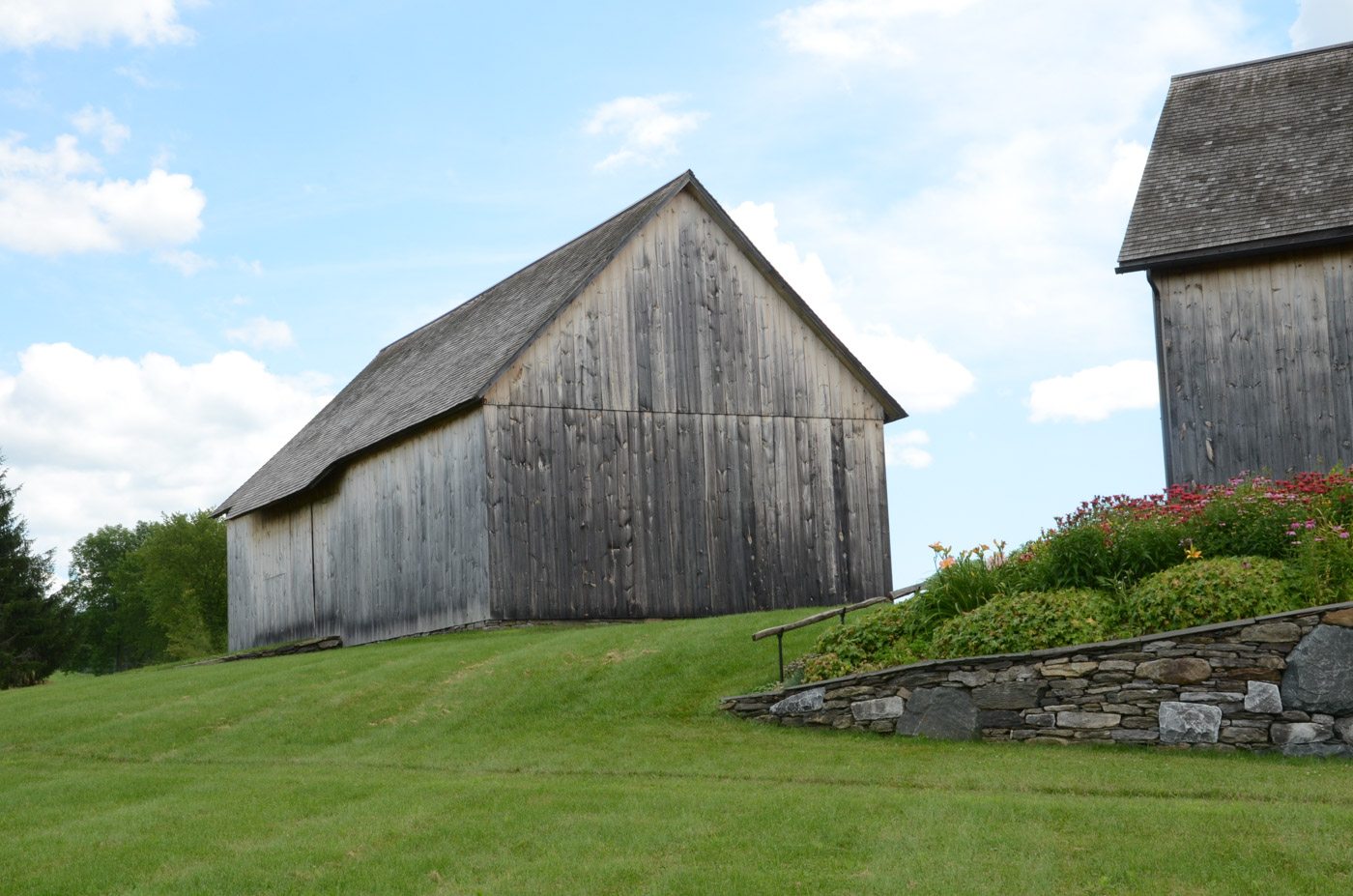
Dorset Mountain Home is a contemporary building which draws on the steep gable barn roofs of Vermont, where the house is situated.
Below is Board + Batten Guest House named after the traditional board and batten exterior panelling of homes in this region, also in Vermont.

Further examples are contemporary homes in the highlands and islands of Scotland which are being built with respect to the traditional style of this region. In areas like these there is a close relationship between people and the environment and the homes are designed to fit in and not take from or jar with the environment around them.

Architectural firms such as Dualchas and Rural Design are ensuring homes are being built which consider ‘design elements like social, economic and environmental sustainability’ (The Culture Trip, 2019)


Black house on the Isle of Skye is designed by architects Rural Design. Black House is built into a hollow between two drumlins, this shields it from the high winds on the island, whilst not detracting from views in the area.
The buildings form and exterior black cladding is inspired from the traditional agricultural buildings which are dotted around the landscape. The building is designed to be sturdy and efficient.

The architects state that ‘the house is truly a black house, not only by it’s colour but by it’s very spirit. It draws parallels to the can-do attitude of the original occupants of blackhouses, heroically self-built using materials and skills to create a shelter for the family’ (Rural Design, 2016). I believe this epitomises modern vernacular, built with regard to the local landscape, materials, environment and people, whilst being economical and sustainable.
I live in Oxton, a rural Nottinghamshire Village which was first mentioned in the Doomsday book.
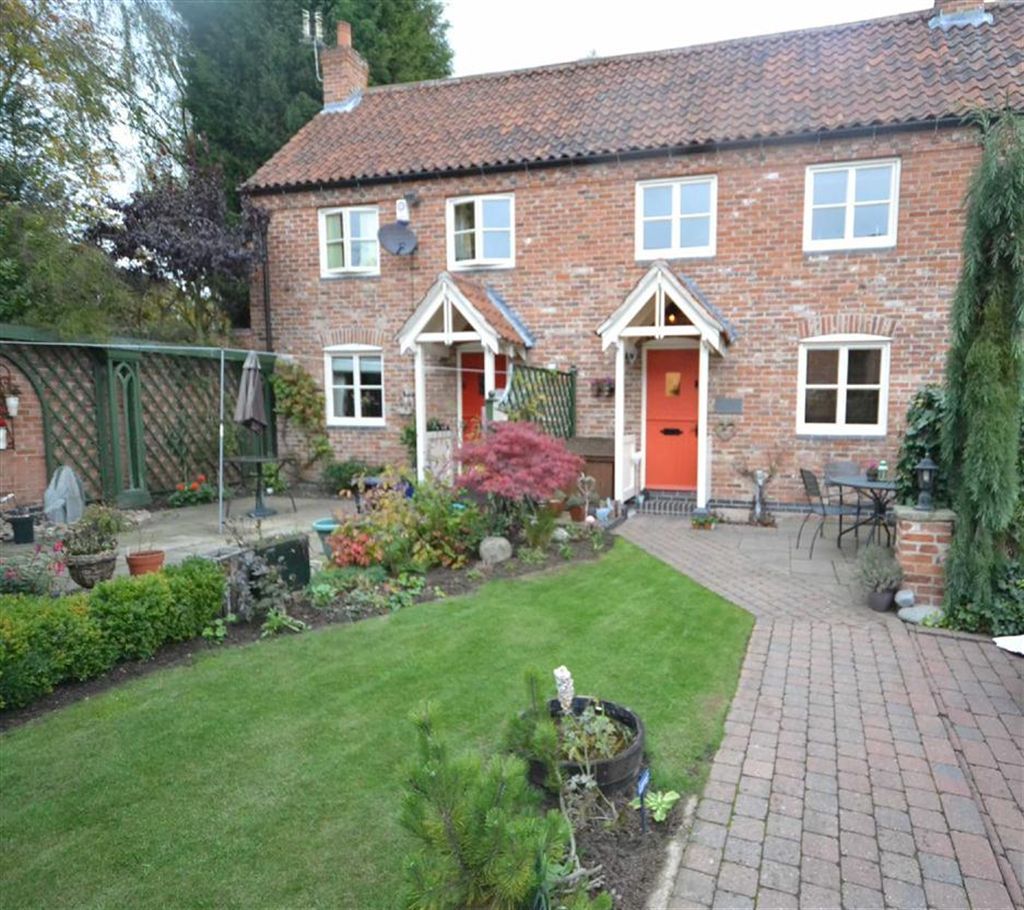
There are a variety of buildings of different ages and styles in the village but the traditional vernacular architecture is very much red brick buildings with pantiled roofs. Such as the 18th Century Manor House which also displays gothic glazing bars.

The Church of St. Peters and St. Pauls however dates back from the 12th century with restoration taking place in 1898. It is a listed building with its listing stating it is built of Ashlar dressed rubble with a slate roof. Ashler being a finely cut stone, usually in a cuboid shape.

As it is a rural village many of the buildings are farm buildings, most of which have been converted into homes, again displaying the traditional red brick and pantiled roofs.

As the village has grown and modernised the building style, whether grand or affordable housing has continued to be sympathetic to the traditional style of building materials, with some modern buildings continuing to be designed with Georgian style windows.


Images
Fig 1. (2019) [Photograph] At: https://www.facebook.com/CobBaugeProject/photos/ms.c.eJwztjS3MDIzNTYxMDSyMDHRM4bwDSF8MwBlpQZT.bps.a.394417864353711/397826534012844/?type=3&theater. (Accessed on 25.03.19)
Fig 2. Dorset Mountain Home (2017) [Photograph] At: http://birdseyevt.com/portfolio/woodshed-architecture-vermont-2/. (Accessed on 28.03.19)
Fig 3. Board + Batten (2017) [photograph] At: http://birdseyevt.com/portfolio/board-batten/. (Accessed on 27.03.19)
Fig 4. (2019) [photograph] https://theculturetrip.com/europe/united-kingdom/scotland/articles/the-striking-modern-buildings-redefining-the-scottish-highlands/. (Accessed on 29.03.19)
Fig 5 & 6. The Black House (2016) [photograph] https://www.ruraldesign.co.uk/Black-House. (Accessed on 29.03.19)
Fig 7. [photograph] https://nipmoosebarns.org/wp-content/uploads/2016/02/nipmoose-scottish-142.jpg. (Accessed 29.03.19)
Fig 8. (2011) [photograph] Murray-Rust, A. (n.d.). The Manor House (C) Alan Murray-Rust. Geograph.org.uk. At: https://www.geograph.org.uk/photo/1629233 (Accessed 29.03.19)
Fig 9. (2011) [Photograph] https://britishlistedbuildings.co.uk/101285622-church-of-st-peter-and-st-paul-oxton/photos/8909#.XJ42M6LLcdU. (Accessed on 29.03.19)
Fig 10. [photograph] https://i.pinimg.com/originals/35/4a/2e/354a2ea9f0bca241fa0a7dc415a1beb8.jpg. (n.d.). (Accessed on 25.03.19)
Fig 11. (2018) [photograph] http://media.rightmove.co.uk/13k/12215/37701983/12215_100027A_27_IMG_01_0001.JPG. (Accessed on 29.03.19)
Fig 12. (2019) [photograph] https://www.rightmove.co.uk/house-prices/detailMatching.html?prop=44747656&sale=59725611&country=england. (Accessed on 25.03.19)
Fig 13. (2018) [photograph] https://media.rightmove.co.uk/dir/crop/10:9-16:9/38k/37766/76540496/37766_NOT140113_IMG_01_0000_max_476x317.jpg. (Accessed on 29.03.19)
Sources
ArchDaily. (2011). Vernacular Architecture and the 21st Century. [online] At: https://www.archdaily.com/155224/vernacular-architecture-and-the-21st-century/ (Accessed on 27.03.19)
British Listed Buildings. (2019). Church of St Peter and St Paul, Oxton, Nottinghamshire. [online] Britishlistedbuildings.co.uk. At: https://britishlistedbuildings.co.uk/101285622-church-of-st-peter-and-st-paul-oxton/photos/8909#.XJ42M6LLcdU (Accessed 29.03.19)
Chalmers, T. (2019). The Striking Modern Buildings Redefining The Scottish Highlands. Culture Trip. At: https://theculturetrip.com/europe/united-kingdom/scotland/articles/the-striking-modern-buildings-redefining-the-scottish-highlands/ (Accessed on 29.03.19)
McKnight, J. (2018). Birdseye Design references local vernacular for secluded Vermont dwelling. [online] Dezeen. At: https://www.dezeen.com/2018/01/15/birdseye-design-board-batten-local-vernacular-architecture-secluded-house-vermont/ (Accessed 26.03.19)
Ruraldesign.co.uk. (2016). Rural Design Architects – Isle of Skye and the Highlands and Islands of Scotland. [online] Available at: https://www.ruraldesign.co.uk/ (Accessed on 29.03.19)


Referencing
Localhistories.org. (2019). A History of Nottingham. [online] At: http://www.localhistories.org/nottingham.html (Accessed on 21.03.19)
Williams.gen.nz. (2001). A Brief History of Hosiery Manufacture and Lacemaking in Nottingham.. [online] At: http://www.williams.gen.nz/hosiery.html (Accessed on 20.03.19)
 Lee's study journey